
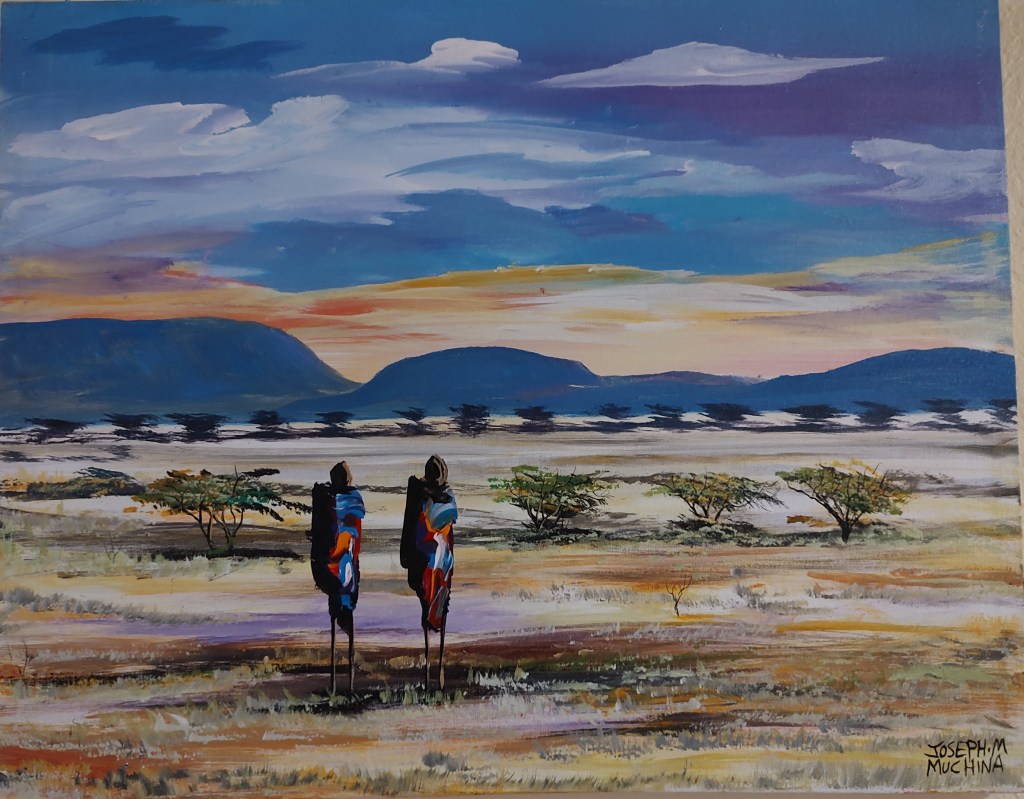
Mary and Martha
went on a walk.
Jesus was gone,
the kitchen was clean,
the house was
back to normal
after an evening
of food
and drink
and conversation.
Mary and Martha
had slept,
both of them
tired
and full of wonder
of what had occurred.
Now,
at daybreak,
the sisters
went on a walk
to talk about
how they felt.
Neither was willing
to admit,
to themselves
or each other,
that they
deeply loved
their brother’s friend,
this man,
Jesus,
who was so different
than any other
they had known.
Mary,
the dreamer,
spoke first.
“Did you hear
how beautifully
he spoke?
He sees the world
in such
an interesting way!”
Martha,
acting like she didn’t know,
responded,
“Who are you talking about?
There was much
conversation
as I cooked
and served
and cleaned up;
unlike you,
who sat at the Teacher’s
feet
like a star-struck
child.”
Mary noted
the jealousy
in Martha’s voice.
“You only say that
because the Teacher
told you
that I had chosen
the better part
sitting and listening
to his words.
You could have sat down,
too,
if you had wanted to.”
“Humph!”
Martha responded,
“and what would
we have eaten?
Besides,
you do not know
what the Teacher
said to me
as he left.
He saw me
sitting alone
in the kitchen,
unable to keep
my eyes open.
He looked at me,
with his soft
dark eyes
and said,
‘Martha, Martha,
do not be afraid,
you, too,
have chosen
an important part –
your service
allows me
and others
to do
what needs to be done.
Do not be anxious,
for I, too,
have come
to serve,
only your service
will be repaid
with love
and everlasting
life;
mine will be
repaid with
scorn,
and contempt
before I return
to my Father.’
What do you think
he meant?
Oh, and then
he told me
something else.
He said,
‘My Father
has given
gifts
to each of you.
Honor one another’s
gifts.
Honor each other
so that
you honor
the One
who sent me.’
Then he touched
my head and left.
Something happened,
Sister!
I do not understand,
but I am humbled.”
As the sisters,
Mary and Martha,
walked,
they talked.
Slowly,
they began to
recognize
in each other
what Jesus
recognized
in each of them.
And they began
to understand…
Service and prayer,
prayer and service
walk hand in hand…
and so did they….
This poem came out of a period of reflection on “doing” versus “being” in which I was grappling with a strong need to stop, and sit, and “be” in the midst of all of my “doing.” Much like my college-aged self who contemplated “becoming” versus “being” in the conversations among clouds, I needed to process this dichotomy in the third person. The Bible story of Martha and Mary (Lk 10:38-42), in which Mary sits at Jesus’ feet as Martha is “distracted by her many tasks” turned out to be the perfect analogy for this new time of reflection. I continue to believe that the journey (“becoming”) is more important than, or at least as important as, the destination (“being”). As I got older and spent so much time working two jobs, working and going through grad school, working nights and not stopping other activities during the day, and then working overtime as a nurse while being taken out of my chaplain role during the pandemic because I was “more valuable” as a hospice nurse than a hospice chaplain, all of the “doing” began to take its toll on me. Both the “becoming” and the “being” turned into an excess of “doing.” My soul, in addition to my body, needed to just rest… and be… and replenish.
As a result of my personal reflection and conversations with important people in my life, last year I began to realize that it doesn’t need to be an either/or. It can be a both/and. All of my “doing” creates the space for “being,” and all of the time I spend “being” provides the space for my “doing.” I was talking with a dear friend and mentor about this, and she said, “It’s like Mary and Martha going on a walk.” Sometimes that’s all it takes in the right moment – a word, a phrase, something I see, a fleeting thought, a deep desire, a nudge… and the poem flows out of the depths of my soul, fully formed.
María y Marta Salieron a Caminar
María y Marta
salieron a caminar.
Jesús se había ido,
la cocina estaba limpia,
la casa estaba
en su estado normal
después de una noche
de comida
y bebida
y conversación.
María y Marta
habían dormido,
las dos
cansadas
y llenas de asombro
por lo que había ocurrido.
Ahora,
al amanecer,
las hermanas
salieron a caminar
para conversar acerca de
sus sentimientos.
Ninguna de las dos
estuvo dispuesta
a admitir,
ni a sí misma
ni a la otra,
que amaba
profundamente
al amigo de su hermano,
a este hombre,
a Jesús,
que era tan diferente
que todos los otros
que habían conocido.
María,
la soñadora,
habló primero.
“¿Escuchaste
la elocuencia
con la que habló?
¡Él ve al mundo
de una manera
tan interesante!”
Marta,
haciéndose la desentendida,
respondió,
“¿De quién hablas?
Hubo mucha
conversación
mientras cociné
y serví
y limpié después;
no como tú,
que te quedaste sentada
a los pies del Maestro
como niña
deslumbrada.”
María notó
el celo
en la voz de Marta.
“Dices eso sólo
porque el Maestro
te dijo
que yo había escogido
la mejor parte
sentada y escuchando
sus palabras.
Tú, también, pudiste
haber sentado,
si hubieras querido.”
“¡Jumf!”
respondió Marta,
“y qué hubiéramos
comido?
Además,
no sabes
lo que el Maestro
me dijo
cuando salió.
Me vio
sentada sola
en la cocina,
sin poder mantener
los ojos abiertos.
Me miró,
con sus ojos
negros y tiernos
y dijo,
‘Marta, Marta,
no temas,
tú, también,
has escogido
una parte importante –
tu servicio
nos permite a mí
y a otros
hacer
lo que se necesita.
No te angusties,
porque yo, también,
he venido
a servir,
sino que tu servicio
será recompensado
con amor
y vida
eterna;
el mío
será recompensado
con desdén,
y desprecio
antes de que retorne
a mi Padre.’
¿Qué crees que
quiso decir?
Oh, y después
me dijo
otra cosa.
Dijo,
‘Mi Padre
ha dado
dones
a cada una.
Honren sus dones
entre sí.
Hónrense
para que
honren
al que
me ha enviado.’
Después, me tocó
la cabeza y se fue.
¡Algo pasó,
Hermana!
No entiendo,
pero me siento conmovida.”
Mientras las hermanas,
María y Marta,
caminaron,
conversaron.
Lentamente,
comenzó cada una
a reconocer
en la otra
lo que Jesús
reconoció
en las dos.
Y comenzaron a
entender…
Servicio y oración,
oración y servicio
van juntos…
y ellas también
siguieron juntas
cogidas de la mano….
Este poema salió de un periodo de reflexión acerca de “hacer” versus “ser” (o “no hacer”) en lo cual estuve buscando reconciliar dentro de mí una necesidad fuerte de parar, y sentarme, y “no hacer” en medio de todo mi “hacer.” Parecido a cuando estuve en la universidad y contemplaba “llegar a ser” versus “ser” en las conversaciones entre las nubes, necesité considerar esta dicotomía en tercera persona. La historia bíblica de Marta y María (Lc 10:38-42), en la cual María se sienta a los pies de Jesús mientras Marta está “absorbida por los muchos quehaceres” resultó ser la analogía precisa para esta nueva etapa de reflexión. Sigo creyendo que el camino (“llegar a ser”) es más importante que, o por lo menos tan importante como, el destino (“ser”). Con los años que pasé tanto tiempo trabajando en dos empleos, trabajando mientras estudiaba para mi maestría, trabajando de noche sin parar mis actividades diurnas y por último trabajando horas extras como enfermera mientras me quitaban de mi rol como capellana durante la pandemia porque fui “más útil” como enfermera que capellana de cuidados paliativos, todo el ”hacer” comenzó a perjudicarme. Tanto el “llegar a ser” como el “ser” se convirtió en un exceso de “hacer.” Mi alma, al igual que mi cuerpo, simplemente necesitaban descansar… y no hacer… y reponerse.
Como resultado de mi reflexión personal y conversaciones con personas importantes en mi vida, el año pasado comencé a darme cuenta de que no tiene que ser o el uno o el otro. Puede ser ambas cosas. Todo mi “hacer” crea espacio para “no hacer,” y todo el tiempo que paso “sin hacer” crea espacio para “hacer.” Estuve conversando con una buena amiga y mentora de esto y dijo, “Es como si María y Marta salieran a caminar.” A veces es todo lo que necesito en el momento preciso – una palabra, una frase, algo que veo, un pensamiento fugaz, un deseo profundo, un susurro… y el poema fluye desde las profundidades de mi alma, completamente formado.


 Words From A Desert Heart
Leave a reply to Geoff Peterson Cancel reply